
EYE HEALTH PROBLEMS
Keratoconus
Changes to the Cornea
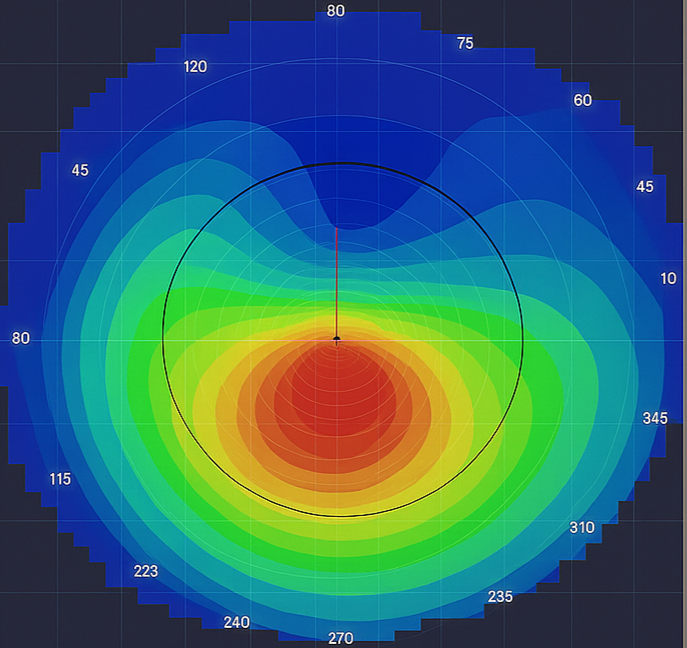
Keratoconus is a condition where the cornea — the transparent front surface of the eye — becomes thin and cone-shaped, particularly in the central or lower region. This irregular shape affects how light enters the eye, leading to distorted and blurred vision.
Who Is Affected?
Keratoconus typically appears between the ages of 10 and 25 and may progress until around age 40. It often has a genetic component, but is also associated with:
Allergies and frequent eye rubbing
Infantile eczema and asthma
Double-jointedness
Symptoms
Blurred or distorted vision
Increased sensitivity to light and glare
Halos around lights
Frequent changes in glasses prescription
Poor night vision
Early diagnosis allows for appropriate management and monitoring.
Treatment Options
Early stages: Vision can often be corrected with spectacles
Progressive cases: Require custom rigid (hard) contact lenses to improve vision
Advanced cases: May need corneal cross-linking or corneal transplant surgery to stabilize or restore vision [healthdirect.gov.au]