
The instruments behind your eye care
Each instrument here shows your optometrist a different part of your eyes. This is what we use, by name, and what each one is for.
The back of the eye
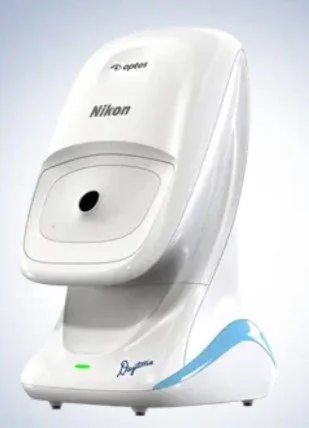
OPTOS ultra-wide retinal scan
A 200° ultra-widefield view of the retina, captured in less than half a second. Used for eye screening and monitoring.
Learn more →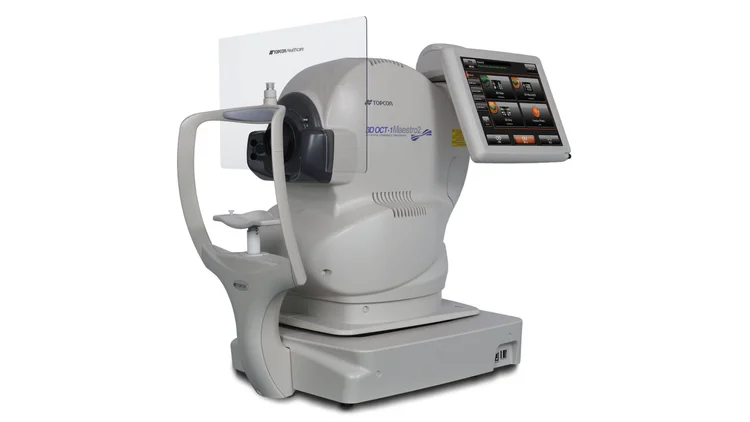
Topcon Maestro 2 OCT
Optical coherence tomography (OCT): a non-invasive scan that shows the retina and optic nerve in detailed cross-section.
Learn more →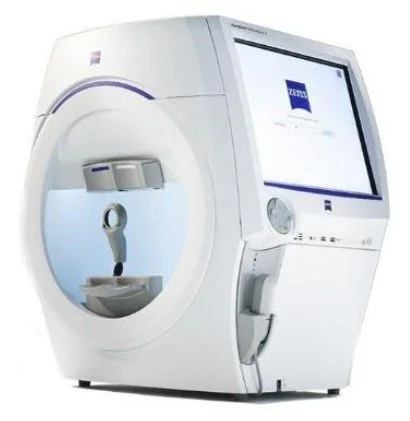
Zeiss Humphrey visual field analyser
Measures the full range of your side vision, to detect blind spots or vision loss that may point to glaucoma, retinal disease or a neurological cause.
Learn more →The front of the eye
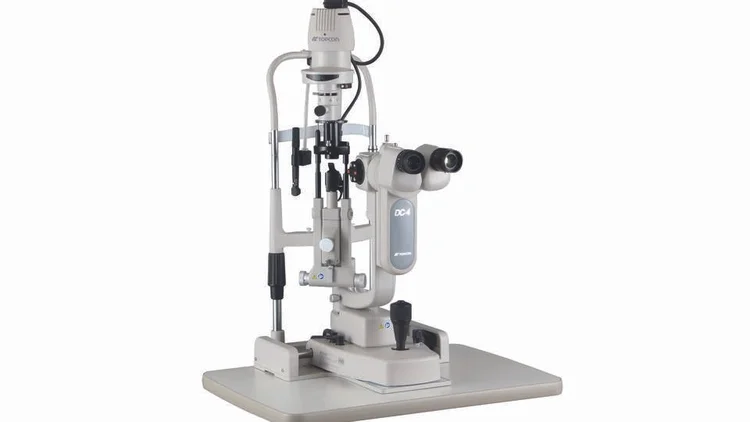
Topcon slit lamp with camera
A high-powered microscope for the front of the eye: the cornea, the lens and the structures around them. The camera records what we see.
Learn more →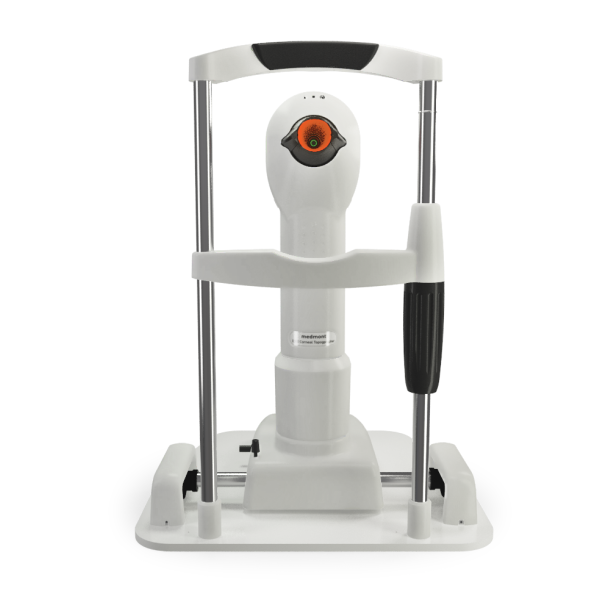
Medmont corneal topographer
Charts the shape of the cornea as colour-coded maps, used to diagnose and manage corneal conditions such as keratoconus.
Learn more →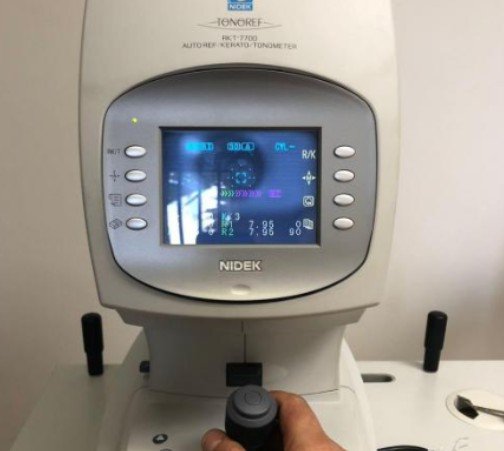
Nidek tonometer and autorefractor
One instrument, three measurements: your eye pressure without contact, the curvature of the cornea, and a starting point for your prescription.
Learn more →Dry eye
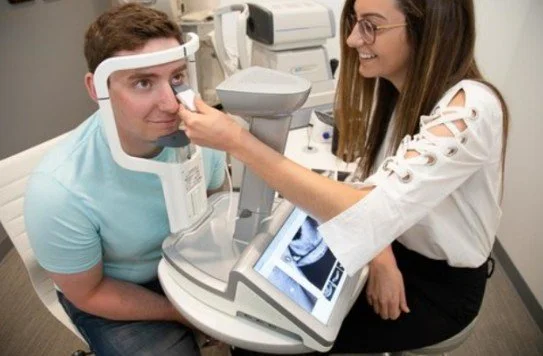
Johnson & Johnson LipiScan
Images the oil glands in your eyelids, which stop your tears from evaporating. Used to assess and diagnose evaporative dry eye.
Learn more →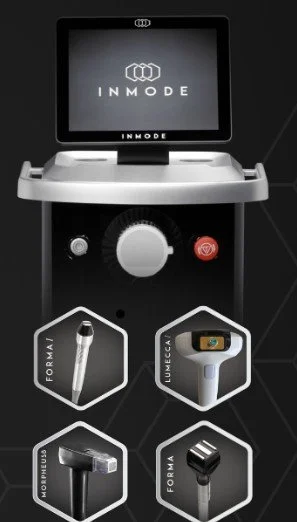
InMode Envision
Our dry eye treatment platform: radiofrequency (Forma-I) to warm the eyelid glands, and intense pulsed light (Lumecca-I) for eyelid inflammation in suitable skin types.
Learn more →Eyedeal Dry Eye Clinic
Assessment, in-clinic treatment and care at home, in one place.
Plus in-room treatments chosen for your plan: gentle warmth, a professional lid clean and light therapy.
Visit the Dry Eye Clinic →Fitting your glasses
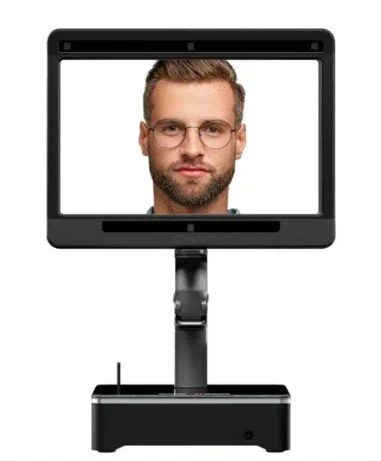
Shamir Spark 3D measuring tool
A 3D measuring and dispensing tool. It records your natural head and body position and works out your individual measurements for progressive and single vision lenses.
Learn more →General information only, not a diagnosis.